Chapter 02 · 1993—2001

The camera became part of the controller.

Once games moved into three dimensions, the player had to steer a body and a camera at the same time. A small stick changed what a controller had to do.

Years
1993—2001
Exhibits
04
Focus
Movement → camera → analog control
Exhibit 011993
A black Doom installer disk with the red Doom logo and the text Disk 1 of 4.
Photo: The Centre for Computing History, Doom installer disk, object 62793. Object record.

1993

Doom

Doom put the player behind a first-person camera and made speed itself the appeal. Movement, aiming, and the shape of the room all happened in the same view.

Why it mattered

It taught players to read a 3D space through a camera, and it made the mouse and keyboard feel like a way to move through a world.
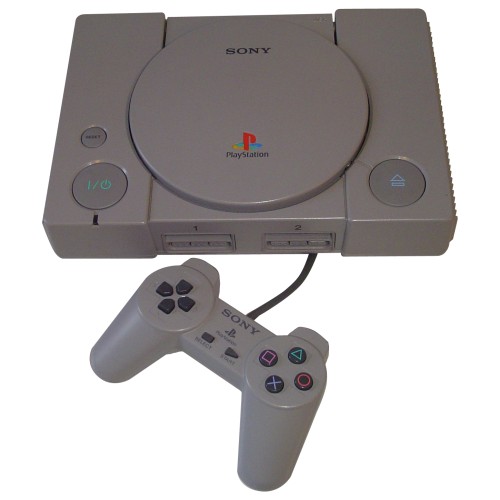
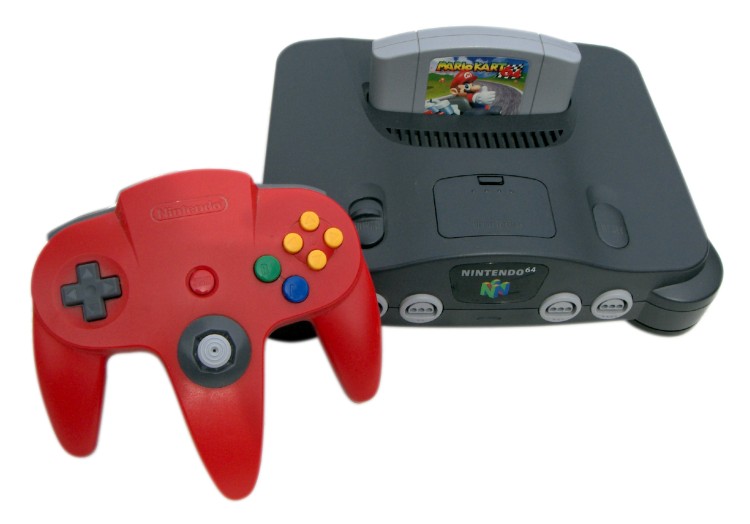
Exhibit 021994 / 1995
A grey Sony PlayStation console with a grey controller connected in front.
Photo: The Centre for Computing History, Sony PlayStation (DualShock Pack), object 62595. Object record.

1994 / 1995

PlayStation

Sony's console brought 3D graphics and CD sound into the living room. It also made games feel like mainstream entertainment: a black box, a grey controller, and a shelf of discs.

Why it mattered

It turned 3D into a mass-market language, and made the disc the normal way to own a game.

Exhibit 031996
A dark grey Nintendo 64 console with a red controller and a Mario Kart cartridge inserted.
Photo: The Centre for Computing History, Nintendo 64, object 6015. Object record.

1996

Nintendo 64

The Nintendo 64 put an analog stick in the middle of the controller. Instead of eight directions, the player could move through a continuous range of speeds and angles.

Why it mattered

It made 3D movement feel natural. Games could be designed around a camera, a character, and the space between them.

Exhibit 041997
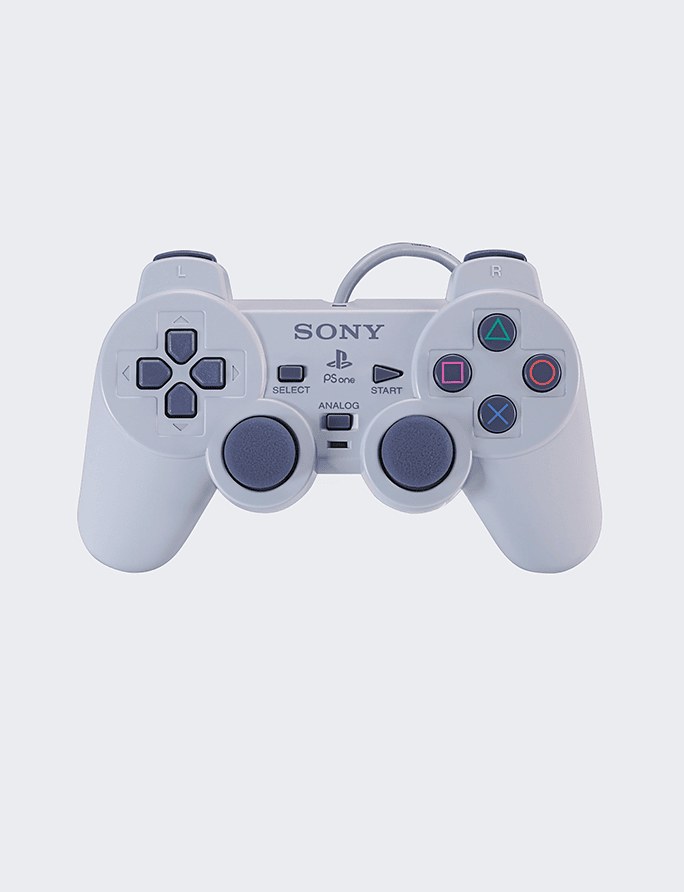
A grey original Sony DualShock controller with two analog sticks, a D-pad, and four face buttons.
Photo: Sony Interactive Entertainment, company history timeline, 1997 DualShock controller. Source.

1997

DualShock

Two analog sticks and vibration turned the controller into a two-handed interface. One stick could move the character; the other could move the camera.

Why it mattered

It gave 3D games a standard control shape. The left stick moves, the right stick looks, and the buttons do everything else.

References

Sources and credits

Historical details were checked against the museum records below. Photographs are used for coursework with teacher permission; full credits are repeated under each image and in CREDITS.md.